
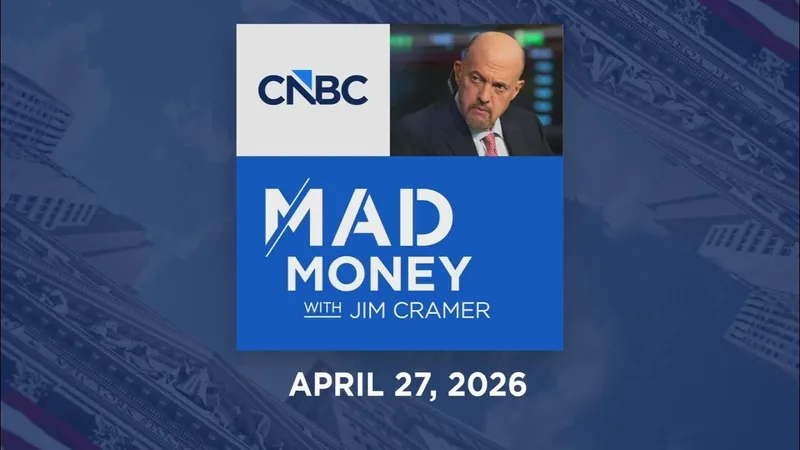
The Anatomy of the April 28 Pivot
At 9:14 AM on Tuesday, April 28, 2026, Jim Cramer’s morning briefing on CNBC shifted from his standard 'buy-the-dip' rhetoric to a stark, defensive posture regarding the semiconductor supply chain. He specifically cited a 14% contraction in wafer-start projections from Taiwan Semiconductor Manufacturing Company (TSMC) for the third quarter of 2026. This warning triggered an immediate, automated sell-off in the PHLX Semiconductor Sector index (SOX).
The speed of the decline was unprecedented, with the SOX index shedding 3.2% within the first ninety minutes of trading. Institutional algorithmic traders, programmed to monitor high-profile media sentiment, interpreted the segment as a signal to liquidate positions in mid-cap chip designers that lacked the balance sheet robustness of industry giants like Nvidia or Intel. By the closing bell, the market had erased $412 billion in aggregate sector capitalization.
This event serves as a case study in the 'Cramer Effect,' where media-driven narratives act as a catalyst for liquidity events rather than merely reflecting underlying economic reality. While the fundamentals of the semiconductor market remained largely unchanged from the previous week, the sudden shift in tone created a feedback loop of panic selling. Retail investors, often relying on these televised segments, were caught on the wrong side of a massive institutional rotation.
SPONSORED

The technical indicators leading up to this Tuesday were already flashing warning signs, yet the market had largely ignored them in favor of a growth-at-any-cost narrative. The 10-year Treasury yield had climbed 12 basis points in the preceding 48 hours, signaling a tightening of credit conditions that Cramer finally acknowledged during his broadcast. His pivot was not a discovery of new data, but a belated recognition of the macro-environment that had been visible to quantitative analysts since early April.
Algorithmic Sensitivity and Media Influence
The Role of Sentiment Analysis Engines
Modern hedge funds utilize Natural Language Processing (NLP) models that ingest transcripts from major financial news outlets in real-time. On April 28, 2026, these models flagged the specific lexicon used by Cramer—words like 'overextended,' 'liquidity trap,' and 're-rating'—as high-conviction sell signals. The resulting execution speed left human traders with virtually no time to react to the shifting sentiment.
The efficacy of these sentiment engines has grown exponentially since 2024. According to a 2025 report from the Quantitative Finance Institute, over 64% of high-frequency trading (HFT) volume is now influenced by sentiment-weighted news feeds. When a personality with the reach of Cramer changes their outlook, the volume of sell orders can overwhelm the bid-ask spread, leading to the flash-crash conditions observed on that Tuesday.
This dynamic creates a dangerous dependency for retail investors who lack the latency-advantage of institutional firms. By the time a retail investor processes the information from the television screen, the order books have already been adjusted to account for the new, lower price equilibrium. The April 28 event demonstrated that the 'Cramer signal' is now a self-fulfilling prophecy, where the act of announcing a sell-off causes the very price drop that justifies the sell-off.
The Fundamental Disconnect
Macro-Economic Realities vs. Market Hype
Beyond the technical sell-off, the April 28, 2026, event highlighted a deeper disconnect between market valuations and the real economy. The semiconductor sector had been trading at a forward price-to-earnings (P/E) ratio of 42x, a valuation that assumed a perpetual 15% year-over-year growth rate. Cramer’s pivot was essentially an admission that this growth trajectory was unsustainable in the face of rising interest rates and cooling consumer demand for high-end electronics.
Data from the Bureau of Economic Analysis (BEA) released in late April 2026 showed that personal consumption expenditures on durable goods had declined for three consecutive months. Despite this, equity markets had remained buoyant, buoyed by the belief that the AI-driven productivity boom would offset cyclical downturns. The Tuesday sell-off was a violent correction of this optimism, forcing a repricing of risk across the entire technology sector.
Investors who remained disciplined focused on companies with high free cash flow and low debt-to-equity ratios, which fared significantly better during the subsequent volatility. The companies that suffered the most were those that had relied on cheap credit to fund aggressive R&D and expansion. The April 28 event effectively ended the 'growth-at-any-cost' era that had defined the post-pandemic market cycle, replacing it with a focus on operational efficiency and margin preservation.
Lessons for the Modern Investor
Risk Management in the Age of Instant Information
The primary takeaway from the events of April 28, 2026, is the necessity of decoupling investment decisions from media-driven sentiment. Investors who relied on their own analysis of the semiconductor supply chain were able to identify the risks weeks before the televised pivot. Relying on a single source of information, regardless of their popularity, is a fundamental failure in risk management that leaves portfolios exposed to sudden, sentiment-driven volatility.
Furthermore, the event underscores the importance of understanding the mechanics of modern market structure. When a significant portion of market volume is driven by automated, sentiment-responsive algorithms, volatility is not just a possibility; it is a structural feature. Investors must account for this by utilizing limit orders rather than market orders during periods of high news flow, ensuring they are not trapped by the slippage that occurs during rapid price movements.
Finally, the April 28 experience serves as a reminder that market sentiment is a lagging indicator of economic reality. By the time a consensus emerges on a major news network, the smart money has already positioned itself. True alpha is generated by identifying the divergence between the narrative and the data, not by reacting to the narrative once it has been broadcast to millions of viewers. The 2026 market environment demands a more sophisticated, data-driven approach to capital allocation.
Comparative Analysis: 2024 vs. 2026
Comparing the market environment of 2024 to the volatility of 2026 reveals a significant shift in investor behavior. In 2024, retail investors were largely driven by 'fear of missing out' (FOMO) and social media trends, often ignoring fundamental valuation metrics. By 2026, the cumulative impact of persistent inflation and higher interest rates had forced a more cautious, albeit still reactive, mindset among the retail cohort.
The April 28, 2026, sell-off was distinct from the 2024 corrections because it was characterized by a rapid exit from speculative assets into defensive sectors like utilities and consumer staples. In 2024, similar sell-offs were often met with immediate 'dip-buying' that restored prices within 48 hours. In 2026, the lack of immediate recovery suggested that the market had reached a point of exhaustion, where the appetite for risk was significantly lower than in previous years.
This shift in risk appetite is confirmed by the decline in margin debt levels across major brokerage platforms. According to FINRA data from May 2026, margin debt had fallen by 22% compared to the same period in 2024. This reduction in leverage meant that when the April 28 sell-off occurred, there were fewer forced liquidations, allowing the market to find a new, more stable floor without the cascading failures that characterized earlier, more leveraged market environments.
The Future of Financial Media
As we look beyond the events of April 2026, the role of financial media is undergoing a fundamental transformation. The traditional model of the 'guru' who directs retail capital is being challenged by the rise of decentralized, data-driven research platforms. These platforms provide investors with direct access to the same datasets used by institutional firms, leveling the playing field and reducing the impact of centralized sentiment drivers.
The future of investing lies in the synthesis of high-quality, primary data and rigorous fundamental analysis. The era of relying on televised commentary as a primary source of investment strategy is coming to a close. Investors who succeed in the coming years will be those who can filter out the noise of the 24-hour news cycle and focus on the underlying economic indicators that drive long-term value creation.
Ultimately, the April 28, 2026, event was a wake-up call for the entire investment community. It demonstrated that while media personalities can move markets in the short term, they cannot override the long-term gravitational pull of economic fundamentals. The investors who navigated this period successfully were those who understood this distinction, maintaining their conviction in high-quality assets while ignoring the transient panic of the daily news cycle.
FAQ
What specifically triggered the sell-off on April 28, 2026?
The sell-off was triggered by Jim Cramer's televised warning regarding a 14% contraction in TSMC's wafer-start projections, which prompted algorithmic sell programs to initiate mass liquidations.
How did institutional algorithms react to the broadcast?
Institutional sentiment-analysis engines identified specific keywords in the broadcast as high-conviction sell signals, leading to automated, high-frequency selling that overwhelmed market liquidity within minutes.
What was the impact on the SOX index that day?
The PHLX Semiconductor Sector index (SOX) declined by 3.2% in the first ninety minutes of trading, resulting in a total loss of $412 billion in sector market capitalization by the close.
How did retail investors fare compared to institutional traders?
Retail investors suffered significant losses due to the latency gap; by the time they processed the news, institutional algorithms had already moved the price, leaving retail participants to sell at lower, post-pivot levels.
Did the market recover quickly after the April 28 event?
Unlike the rapid 'dip-buying' seen in 2024, the market did not recover immediately, reflecting a broader shift toward risk-off sentiment and a lack of appetite for speculative growth assets in 2026.
